Showing posts with label US. Show all posts

Thursday, September 27, 2012

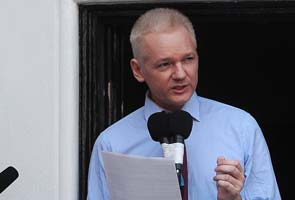
WikiLeaks' Assange mocks Obama via video at UN event

United Nations: WikiLeaks founder Julian Assange, speaking via a choppy video feed from his virtual house arrest in London, lashed out at US President Barack Obama on Wednesday for supporting freedom of speech in the Middle East while simultaneously "persecuting" his organization for leaking diplomatic cables.

Assange, who has been holed up in the Ecuadorean Embassy since June to avoid extradition, made the comments at a packed event on the sidelines of the United Nations General Assembly.

Assange mocked Obama for defending free speech in the Arab world in an address to the United Nations on Tuesday, pointing to his own experience as evidence that Obama has "done more to criminalize free speech than any other US president."

WikiLeaks' Assange mocks Obama via video at UN event"It must have come as a surprise to the Egyptian teenagers who washed American teargas out of their eyes (during the Arab Spring) to hear that the US supported change in the Middle East," Assange said.

"It's time for President Obama to keep his word ... and for the US to cease its persecution of WikiLeaks," he said.

Assange's combative comments, plus statements made by Ecuadorean Foreign Minister Ricardo Patino and his other allies at the event, suggested no solution is in sight to the diplomatic standoff surrounding the 41-year-old Australian.

British authorities have surrounded the Ecuadorean Embassy and said if Assange sets foot outside, they will arrest him and extradite him to Sweden to face rape and sexual assault allegations.

Assange's lawyers and Ecuador's government fear that could lead in turn to extradition to the United States, where they say he would face "inhumane" prison conditions and even the death penalty.

Assange, who looked to be in good health as he sat at a desk in front of a bookshelf and addressed the 150 or so people at the event, said Britain and Sweden have so far refused to provide guarantees he would not be extradited to the United States.

US and European government sources have countered that the United States has issued no criminal charges or launched any attempts to extradite Assange.

IN BRITAIN'S COURT

Patino is scheduled to meet with British Foreign Secretary William Hague in New York on Thursday to discuss Assange, and he said there are "multiple paths" that could lead out of the standoff. Yet, in an interview with Reuters following the U.N. event, Patino made clear that Ecuador is not willing to cede much ground.

"The ball's in their court right now," Patino said.

Patino held in his hands a mimeographed copy of an 1880 agreement signed between Britain and Ecuador, which he said prohibits extradition in cases such as Assange's. He said he would show the document to Hague on Thursday.

Patino rigorously defended Ecuador's decision to grant political asylum to Assange, expressing disbelief that Britain is "determined" to arrest the former computer hacker even though he said there are no criminal charges against him. "This means you have reason to suspect he's being persecuted," Patino said.

He said Assange is in relatively good spirits but expressed concern his physical and psychological condition could deteriorate.

"I think of myself, how I'd react in that situation, not being able to go outside, being isolated," Patino said. "It's practically like being jailed."


© Thomson Reuters 2012

Friday, September 21, 2012

Anti-Islam film controversy: US turns to TV ads to spread message in protest-hit Pakistan

Washington: The United States has paid Pakistani television stations to run advertisements featuring President Barack Obama and Secretary of State Hillary Clinton, hoping to soothe public opinion in a country hit by protests against an anti-Islam movie made in California, the State Department said on Thursday.

The US embassy in Islamabad spent about $70,000 to run the announcement, which features clips of Obama and Clinton underscoring U.S. respect for religion and declaring the U.S. government had nothing to do with the movie, it said.

"In order to ensure we reached the largest number of Pakistanis, some 90 million as I understand it in this case with these spots, it was the judgment that this was the best way to do it," State Department spokeswoman Victoria Nuland told a news briefing.

The U.S. announcement aired as Washington warned Americans to avoid non-essential travel to Pakistan, one of the mostly Muslim countries hit by a wave of anti-American demonstrations. In Libya, a deadly assault last week killed the U.S. ambassador and three other Americans.

The protests, which were sparked by an Internet video that mocked the Prophet Mohammad and swept through Yemen, Egypt and other countries, also prompted the U.S. government to withdraw non-essential personnel in Tunisia and Sudan.

In Pakistan, protesters have demonstrated in more than a dozen cities.

Counter-terrorism analysts for the New York Police Department warned in a paper circulated on Thursday that the anti-U.S. and anti-Western protests would continue to spread, fueled most recently by a French magazine's publication of cartoons lampooning the Prophet Mohammad.

The cartoons in France's Charlie Hebdo satirical weekly have provoked relatively little street anger thus far, although about 100 Iranians demonstrated outside the French embassy in Tehran.

Nuland said the decision to buy the television ads, identified as paid public service announcements, was not unusual in countries where this is "the norm for getting your message out."

"I think the sense was that this particular aspect of the president and the secretary's message needed to be heard by more Pakistanis than had heard it, and that this was an effective way to get that message across," she said.

She said it would take time to measure the effectiveness of the ads in Pakistan, where on Thursday huge crowds again gathered to protest against the video.

(Reporting by Andrew Quinn and Mark Hosenball; editing by Warren Strobel and Mohammad Zargham)


© Thomson Reuters 2012

Thursday, September 20, 2012

U.S. official says Benghazi consulate was 'terrorist attack'

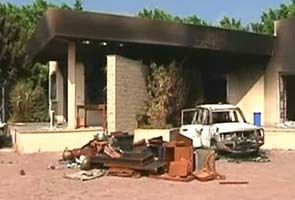
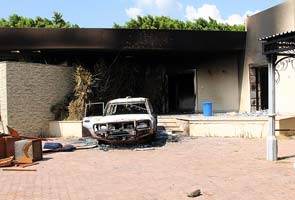
Washingtom: The assault on the U.S. consulate in Benghazi last week in which four Americans died was a "terrorist attack" that may have had an al Qaeda connection, a top U.S. counterterrorism official told Congress on Wednesday.

Rocket-propelled grenades and mortars struck the consulate on September 11, the anniversary of the 2001 attacks on the United States. U.S. Ambassador Christopher Stevens and three other Americans died.

"They were killed in the course of a terrorist attack on our embassy," Matthew Olsen, director of the National Counterterrorism Center, said in response to a question at a Senate hearing.

U.S. official says Benghazi consulate was 'terrorist attack'Olsen said whether the attack was planned for September 11 was under investigation, but the information so far indicated it was "an opportunistic attack" that "began and evolved, and escalated over several hours."

There were well-armed militants in the area, he said. "What we don't have at this point is specific intelligence that there was a significant advance planning or coordination for this attack."

Whether or not the attack was planned well in advance has become a point of dispute between the Obama administration and Republican lawmakers who say it bears the hallmarks of a premeditated assault. Senior Libyan officials have said the attack was planned in advance.

At the same hearing, Republican Senator Susan Collins said she agreed with Libyan officials that the attack was premeditated, planned and associated with the September 11 anniversary. She expressed concern about the security at the consulate, where no Marines were present and security was handled by foreign nationals.

Olsen told lawmakers U.S. authorities are investigating who was responsible for the attack, and it appeared that a "number of different elements" were involved, including individuals connected to militant groups.

"As well, we are looking at indications that individuals involved in the attack may have had connections to al Qaeda or al Qaeda affiliates, particularly Al Qaeda in the Islamic Maghreb," he said.

"The picture that is emerging is one where a number of different individuals were involved, so it's not necessarily an either-or proposition," Olsen said.

© Thomson Reuters 2012

Saturday, September 15, 2012

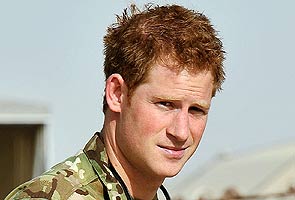
Afghan base where Prince Harry is posted attacked by Taliban, 2 dead

Afghan base where Prince Harry is posted attacked by Taliban, 2 deadKabul: Two U.S. Marines were killed and other Americans were wounded on Friday during a Taliban attack on a base in southern Afghanistan where Britain's Prince Harry is stationed, U.S. officials told Reuters, speaking on condition of anonymity.

A spokesman for NATO-led forces in Afghanistan said Harry was on the base at the time of the attack but was unharmed.

"Prince Harry was never in any danger," spokesman Martyn Crighton said, adding that the NATO-led International Security Assistance Force (ISAF) would investigate whether his presence on the base had motivated the attack.

The attack involved rocket-propelled grenades, mortars and small-arms fire, with insurgents breaching the perimeter of Camp Bastion in volatile Helmand province, U.S. officials said.

Crighton declined to offer that level of detail or give the nationalities of the victims. Crighton also did not say precisely how many people were wounded in the attack.

Earlier this week, the Afghan Taliban said they were doing everything in their power to either kill or kidnap Queen Elizabeth's grandson in what they dubbed their "Harry Operations".

Crighton said ISAF would investigate whether his presence on the base had motivated the attack.

A U.S. official told Reuters that an initial report estimated five Americans were wounded but added that the extent of their injuries was unclear. The official said that this was only an initial report and that the number could change.

Crighton said the attack took place between 9 p.m. and midnight on Friday and that NATO-led forces were still securing the area in and around Camp Bastion.

The motivation for the attack will undoubtedly come under scrutiny. Violence is sweeping the Muslim world over a film that insults the Prophet Mohammad, although the Pentagon earlier on Friday said protests in Afghanistan were so far peaceful.


© Thomson Reuters 2012

US investigating man linked to anti-Islam film

Los Angeles: A California man convicted of bank fraud is under investigation for possible probation violations stemming from the making of an anti-Islam video that triggered violent protests against the United States in the Muslim world, U.S. officials said on Friday.

The man, 55-year-old Nakoula Basseley Nakoula of the Los Angeles suburb of Cerritos, told his Coptic Christian bishop that he was not involved in the film, but media reports have widely linked his name to the video.

"The U.S. probation office in the central district of California is reviewing the case," said Karen Redmond, spokeswoman for the administrative office of the U.S. Courts in Washington, D.C., reached by phone from Los Angeles.

A source with knowledge of the case confirmed that the probation office was looking specifically into Nakoula's possible involvement in making the film for violations of the terms of his release.

The crudely made 13-minute English-language video, which was filmed in California and circulated on the Internet under several titles including "Innocence of Muslims," portrays the Prophet Mohammad engaged in crude and offensive behaviour.

The film sparked a violent protest at the U.S. consulate in the Libyan city of Benghazi in which the U.S. ambassador and three other Americans were killed on Tuesday. Protests have spread to other countries across the Arab and Muslim world.

For many Muslims, any depiction of the prophet is blasphemous. Caricatures deemed insulting in the past have provoked protests and drawn condemnations from officials, preachers, ordinary Muslims and many Christians in the Middle East.

Adding to the incendiary nature of the film was the fact that it had been promoted by a U.S.-based Egyptian Coptic Christian activist, Morris Sadek, who said his intent was to highlight discrimination against Egypt's Coptic minority. Copts have expressed fear the film could lead to retaliation.

Nakoula, whose home in Cerritos has been besieged by the news media and who could not be reached for comment, pleaded guilty to bank fraud in 2010 and was sentenced to 21 months in prison, to be followed by five years on supervised probation, court documents showed.

Nakoula was accused of fraudulently opening bank and credit card accounts using Social Security numbers that did not match the names on the applications, a criminal complaint showed. He was released in June 2011, and at least some production on the video was done later that summer.

NOT INVESTIGATING CONTENT

U.S. officials said authorities were not investigating the film project itself, and officials have said that even if it was inflammatory or led to violence, simply producing it cannot be considered a crime under U.S. law.

But the written terms of Nakoula's prison release contain behavior stipulations that bar him from accessing the Internet or assuming aliases without the approval of his probation officer.

A senior law enforcement official in Washington indicated the probation investigation relates to whether he broke either or both of these conditions. Violations could result in him being sent back to prison, court records show.

The film itself, posted on the Internet since July, has been attributed to a man whose name was given as Sam Bacile, which at least two people linked to the film have said was likely an alias.

A telephone number said to belong to Bacile and provided to Reuters by Sadek was later traced back to a person who shares the Nakoula residence.

Stan Goldman, a Loyola Law School professor, said that whether Nakoula might be sent back to jail over potential probation violations linked to the film, such as accessing the Internet, was a subjective decision up to an individual judge.

"Federal judges are gods in their own courtrooms, it varies so much in who they are," he said, noting such a move would be based on his conduct not on the content of the film.

A pair of attorneys visited Nakoula's home on Friday in Cerritos.

"I've been asked to consult with Mr. Nakoula regarding matters that I'm not at liberty to discuss," Steve Seiden, one of the attorneys, told reporters. He also asked media to leave.

In addition to the bank fraud conviction, Nakoula also pleaded guilty in 1997 to possession with intent to manufacture methamphetamine and was sentenced to a year in jail, according to Sandi Gibbons, a spokeswoman for the Los Angeles District Attorney's Office.

Nakoula told Bishop Serapion of the Coptic Orthodox Diocese of Los Angeles that he was not involved in the film, the bishop told Reuters.


© Thomson Reuters 2012

Libyan officials: US drones behind airport closure

Benghazi: U.S. drones hovered over the eastern city of Benghazi on Friday and militia forces fired toward the crafts, prompting authorities to close the airport for several hours for fear a commercial aircraft could be hit, Libyan officials said.

Abdel-Basit Haroun, the head of the militia in charge of city security, said the drones could easily be spotted from the ground. He says men angry over perceived foreign intervention fired in the air and authorities closed the airport.

"The drones are like bees," he said, referring to the long hours the drones were seen, with their buzzing noise heard in different neighbourhoods of Benghazi. Militias, known as brigades, fought regime forces during Libya's eight-month civil war that led to Moammar Gaddafi's fall last year. Since then, many have roles in keeping security, though they have not been integrated into government forces.

An airport official confirmed the firing on the drones was the reason for the airport shutdown.

U.S. officials said drones in Libya include Predators and Reapers, which are being used for surveillance and are largely unarmed. While drones have been there consistently, officials have increased their coverage and cycles. The officials spoke on condition of anonymity because they weren't authorized to speak to the media.

The American consulate in Benghazi came under deadly attack on Tuesday night when an angry mob and heavily armed Islamists demonstrating against a film denigrating Prophet Muhammad stormed the compound, setting the building on fire. Four Americans, including U.S. ambassador Chris Stevens, were killed.

So far, the identity of the attackers is unknown, though Libyan leaders have vowed to work with the Americans in catching them. Authorities in Libya say they arrested four suspects linked to the attack. Haroun, however, said no one had been arrested and that the announcement is only for media consumption.

Along with drone surveillance, the U.S. has deployed an FBI investigation team, and a small surge of U.S. intelligence officers to try to track down al-Qaida sympathizers thought responsible for turning the demonstration into a violent militant attack.

Friday, September 14, 2012

Two ex-Navy SEALs among dead in Libya attack

Two ex-Navy SEALs among dead in Libya attackWashington: Two of the four Americans killed in Tuesday's attack on the US consulate in Libya were former members of the elite Navy SEALs, US officials said on Thursday.

Secretary of State Hillary Clinton confirmed the identities of the former SEALs as Tyrone Woods and Glen Doherty, praising them as decorated military veterans who "served our country with honour and distinction."

Ambassador Chris Stephens and Sean Smith, an information management officer, also were killed in Tuesday's harrowing assault in the eastern city of Benghazi.

"Our embassies could not carry on our critical work around the world without the service and sacrifice of brave people like Tyrone and Glen," Clinton said in a statement.

Doherty had been working on a mission to track down shoulder-launched surface-to-air missiles in Libya, according to ABC News.

US military and intelligence officials have warned that thousands of the weapons, so-called MANPADs, were unaccounted for after Libya's former dictator, Moamer Gaddafi, fell from power.

The former SEAL described his job in an interview with ABC last month, saying he had travelled across the country chasing leads and then once the weapons were found, his team would destroy them on the spot, the American television network said.

Woods served multiple tours in Iraq and Afghanistan, providing security at US diplomatic posts in Central America and the Middle East.

"He had the hands of a healer as well as the arm of a warrior, earning distinction as a registered nurse and certified paramedic," Clinton said, adding that he is survived by his wife Dorothy and three sons, including Kai, born just a few months ago.

Speaking about Doherty, Clinton said the man who put his life on the line in hotspots throughout the world "died the way he lived - with selfless honour and unstinting valour."

Doherty reportedly trained as a sniper and medical officer in a seven-year career with the SEALs, before leaving to work at a private security company.

According to an account of the attack from senior officials, Doherty was one of two people who died after staff were evacuated to an annex near the main US consulate building.

With the main building engulfed in flames, the annex then came under sustained gunfire until Libyan forces eventually managed to restore order in the early morning hours.

At least three other Americans were wounded in the attack.

Presidential hopeful Mitt Romney issued a statement earlier Thursday mourning the death of Doherty, who was from Massachusetts, where Romney served as governor.

"Ann and I extend our deepest condolences to the family and friends of Glen Doherty, a native of Winchester, Massachusetts, who was among those killed in Tuesday's assault on our consulate in Libya," his statement said.

"Glen served America with bravery and distinction, and gave his life in an effort to save others."

The US State Department defended its security arrangements at the Benghazi consulate, even though dozens of militants were able to breach the compound and keep US security teams at bay for hours.

"We condemn the attack that took the lives of these heroes in the strongest terms, and we are taking additional steps to safeguard American embassies, consulates, and citizens around the world," Clinton said.

"This violence should shock the conscience of people of all faiths and traditions."

She called for unity in the face of the violence.

"We honour the memory of our fallen colleagues by continuing their work and carrying on the best traditions of a bold and generous nation," the top US diplomat added.

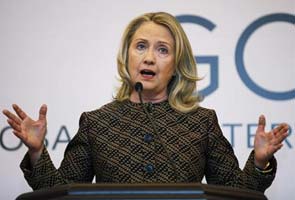
Hillary Clinton calls anti-Islam video 'disgusting'

Hillary Clinton calls anti-Islam video 'disgusting'Washington: U.S. Secretary of State Hillary Rodham Clinton is sharpening her criticism of an anti-Islam video that has provoked protests in the Arab world.

Ms Clinton says the film is "disgusting and reprehensible." She calls it a cynical attempt to offend people for their religious beliefs.

But Ms Clinton says the U.S. would never stop Americans from expressing their views, no matter how distasteful. And she says the film is no justification for violence or attacks on U.S. diplomatic facilities and personnel.

Ms Clinton said on Thursday the U.S. is monitoring protests in Yemen and elsewhere. She's urging countries to take steps to prevent protests escalating into violence.

U.S. embassies attacked in Yemen, Egypt after Libya envoy killed

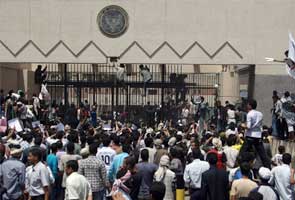
 U.S. embassies attacked in Yemen, Egypt after Libya envoy killedSanna/ Cairo: Demonstrators attacked the U.S. embassies in Yemen and Egypt on Thursday in protest at a film they consider blasphemous to Islam and American warships headed to Libya after the death of the U.S. ambassador there in related violence earlier in the week.

Hundreds of Yemeni demonstrators broke through the main gate of the heavily fortified compound in eastern Sanaa, shouting "We sacrifice ourselves for you, Messenger of God". Earlier they smashed windows of security offices outside the embassy and burned cars.

"We can see a fire inside the compound and security forces are firing in the air. The demonstrators are fleeing and then charging back," one witness told Reuters. A security source said at least 15 people were wounded, some by bullets. An embassy spokesman said its personnel were reported to be safe.

In Egypt, protesters hurled stones at a police cordon around the U.S. embassy in central Cairo after climbing into the embassy and tearing down the American flag. The state news agency said 13 people were injured in violence which erupted on Wednesday night after protests on Tuesday.

A day earlier, Islamist gunmen staged a military-style assault on the U.S. consulate and a safe house refuge in Benghazi, eastern Libya. The U.S. ambassador Christopher Stevens and three other Americans died in the assault, carried out with guns, mortars and grenades. Eight Libyans were injured.

U.S. President Barack Obama vowed to "bring to justice" the Islamist gunmen responsible and the U.S. military moved two navy destroyers towards the Libyan coast, in what a U.S. official said was a move to give the administration flexibility for any future action against Libyan targets.

The military also dispatched a Marine Corps anti-terrorist security team to boost security in Libya, whose leader Muammar Gaddafi was ousted in a U.S.-backed uprising last year.

The attack, which U.S. officials said may have been planned in advance, came on the 11th anniversary of al Qaeda's attacks on the United States on September 11, 2001.

Film

The attackers were part of a mob blaming America for a film they said insulted the Prophet Mohammad. Clips of the Innocence of Muslims, had been circulating on the Internet for weeks before the protests erupted.

They show an amateurish production portraying the Prophet Mohammad as a womanizer, a homosexual and a child abuser. For many Muslims, any depiction of the Prophet is blasphemous and caricatures or other characterisations have in the past provoked protests all over the Muslim world.

An actress in the California production said the video as it appeared bore no resemblence to the original filming. She had not been aware it was about the Prophet Mohammad.

Among the assailants, Libyans identified units of a heavily armed local Islamist group, Ansar al-Sharia, which sympathises with Al Qaeda and derides Libya's U.S.-backed bid for democracy.

U.S. officials said some reporting from the region suggested members of Al Qaeda's north-Africa based affiliate may have been involved.

Yemen, a key U.S. ally, is home to Al Qaeda in the Arabian Peninsula (AQAP), viewed by Washington as the most dangerous branch of the militant network established by Osama bin Laden.

Mr Obama said he had ordered an increase in security at U.S. diplomatic posts around the globe. Protests also erupted this week outside U.S. missions in Tunisia, Sudan and Morocco.

The attacks could alter U.S. attitudes towards the wave of revolutions across the Arab world that toppled secularist authoritarian leaders in Egypt, Libya and Tunisia and brought Islamists to power.

The violence also could have an impact on the closely contested U.S. Presidential race ahead of the November 6 election.

Republican Mitt Romney, Mr Obama's challenger, criticised the President's response to the crisis. He said the timing of a statement from the U.S. embassy in Cairo denouncing "efforts by misguided individuals to hurt the religious feelings of Muslims" made Mr Obama look weak as protesters were attacking U.S. missions.

Mr Romney said it was "disgraceful" to be seen to be apologizing for American values of free speech. Mr Obama's campaign accused Romney of trying to score political points at a time of national tragedy. Obama said Romney had a tendency "to shoot first and aim later."

Western countries denounced the Benghazi killings and Russia expressed deep concern, saying the episode underscored the need for global cooperation to fight "the evil of terrorism".

The attack raised questions about the future U.S. diplomatic presence in Libya, relations between Washington and Tripoli, and the unstable security situation after Gaddafi's overthrow.

Safe house

Mr Stevens, a 52-year-old California-born diplomat who spent a career operating in perilous places, became the first American ambassador killed in an attack since Adolph Dubs, the U.S. envoy to Afghanistan, died in a 1979 kidnapping attempt.

A Libyan doctor pronounced him dead of smoke inhalation. U.S. information technology specialist Sean Smith and two other Americans who have not yet been identified also were killed when a squad of U.S. troops sent by helicopter from Tripoli to rescue the diplomats from the safe house came under mortar attack.

"It was supposed to be a secret place and we were surprised the armed groups knew about it," Captain Fathi al-Obeidi, commander of a Libyan special operations unit ordered to meet the Americans, said of the safe house.

Witnesses said the crowd at the consulate included tribesmen, militia and other gunmen. Libyan leader Mohammed Magarief apologised to the United States over the attack.

Many Muslim states focused their condemnation on the film and will be concerned about preventing a repeat of the fallout seen after publication in a Danish newspaper of cartoons of the Prophet Mohammad. This touched off riots in the Middle East, Africa and Asia in 2006 in which at least 50 people died.

Afghan President Hamid Karzai called the making of the movie a "devilish act" but said he was certain those involved in its production were a very small minority.

The U.S. embassy in Kabul appealed to Afghan leaders for help in "maintaining calm" and Afghanistan shut down the YouTube site so Afghans would not be able to see the film.

General Martin Dempsey, the chairman of the U.S. military's Joint Chiefs of Staff, took the unusual step of telephoning a radical Florida Christian pastor, Terry Jones, and asking him to withdraw his support for the film. Earlier provocative acts by Jones, like publicly burning a Koran, had sparked Muslim unrest.

U.S. Secretary of State Hillary Clinton said the attack was the work of a "small and savage group."
© Thomson Reuters 2012

Thursday, September 13, 2012

Yemeni protesters storm US embassy, police fire warning shots to disperse crowd

Sanaa: Yemeni protesters, angry over a film mocking Islam, on Thursday stormed the complex of the US embassy in Sanaa, defying efforts by riot police to hold them at bay, an AFP correspondent said.

Protesters torched a number of diplomatic vehicle as security forces used water cannons and warning shots in a bid to drive them out.

Police had earlier fired warning shots to disperse few thousands of protesters as they approached the main gate of the mission.

"O, Allah's messenger... O, Mohammed," protesters chanted.

The attack comes two days after four Americans including the ambassador were killed when a Libyan mob attacked the US consulate in Benghazi, and protesters in Cairo tore down the Stars and Stripes and replaced it with a black Islamic flag.

The low-budget movie, "Innocence of Muslims" in which actors have strong American accents, portrays Muslims as immoral and gratuitously violent.

It pokes fun at the Prophet Mohammed and touches on themes of paedophilia and homosexuality, while showing him sleeping with women, talking about killing children and referring to a donkey as "the first Muslim animal."

US envoy killed: Pentagon moves two warships to Libya; suspects attack was planned

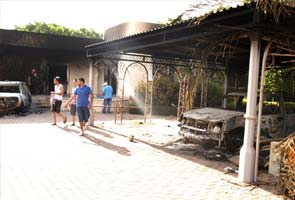
US envoy killed: Pentagon moves two warships to Libya; suspects attack was planned Benghazi: The Obama administration, roiled by the first killing of a U.S. ambassador in more than 30 years, is investigating whether the assault on the U.S. Consulate in Libya was a planned terrorist strike to mark the anniversary of the Sept. 11, 2001, attacks and not a spontaneous mob enraged over an anti-Islam YouTube video.

President Barack Obama declared in a White House appearance that the U.S. would "work with the Libyan government to bring to justice" those who killed Ambassador Chris Stevens and three other Americans. The attack on the Benghazi consulate was "a planned, coordinated, well-executed military style event," House Intelligence Committee Chairman Mike Rogers said.

In a show of force, the Pentagon moved two warships to the Libyan coast. Officials said one destroyer, the USS Laboon, moved to a position off the coast Wednesday, and the destroyer USS McFaul was en route and should be stationed off the coast within days, increasing the number of Navy destroyers in the Mediterranean from four to five.

Officials said the ships, which carry Tomahawk cruise missiles, do not have a specific mission. But they give commanders flexibility to respond to any mission ordered by the president.

Pentagon spokesman George Little said, "Without commenting on specific ship movements, the United States military regularly takes precautionary steps when potential contingencies might arise in a given situation. That's not only logical in certain circumstances, it's the prudent thing to do."

At the same time, some 50 U.S. Marines headed to Libya to reinforce security at U.S. diplomatic facilities, initially at the American embassy in Tripoli, not Benghazi.

The officials spoke on condition of anonymity because they were not authorized to publicly discuss troop movements.

White House press secretary Jay Carney said it was too early to judge whether the Benghazi attack was planned.

"I know that this is being investigated, and we're working with the Libyan government to investigate the incident. I would not want to speculate on that at this time," he said. Several Libyan security guards also were killed.

Rogers, R-Mich., said U.S. intelligence had not yet determined who was responsible, but added, "Our list is narrowing."

"When you see (such an attack), it wasn't some folks who had some guns in their garage and said let's shoot up the consulate," Rogers said in an interview Wednesday.

The FBI was sending evidence teams to Libya, said a law enforcement official.

Analysts are working on several different scenarios based on intelligence that could lead to a motive for the attack. Some concern the possibility of targeting high-ranking officials, according to a law enforcement official briefed on the investigation. But none of the intelligence has suggested terrorists would specifically target Stevens, said the official who also spoke on condition of anonymity because he was not authorized to speak publicly about the investigation.

The attack in Libya, which came hours after a mob stormed the U.S. Embassy in Cairo and tore down the U.S. flag, was presumed to have been triggered by a movie, whose trailer has gone viral on YouTube, depicting the Islamic prophet Muhammad in disrespectful ways. In an extraordinary move, Gen. Martin Dempsey, the chairman of the Joint Chiefs of Staff, called anti-Islamic preacher Terry Jones and asked him to stop promoting the film. A spokeswoman said the church would not show the film Wednesday evening.

"Make no mistake. Justice will be done," a somber Obama pledged at the White House, Secretary of State Hillary Rodham Clinton at his side.

He ordered increased security at U.S. diplomatic missions overseas, particularly in Libya, and said he condemned "in the strongest possible terms the outrageous and shocking" attack. Clinton said she was particularly appalled that the attack took place in Benghazi, which the U.S. had helped liberate from dictator Moammar Gadhafi during the Arab Spring revolution in Libya last year.

Three Americans were wounded, U.S. officials said.
benghazi_consulate_burnt_ambassador_killed2_295.jpg
The aftermath of the two attacks also stirred the U.S. presidential campaign, where until Wednesday, foreign policy had taken a back seat to the struggling economy.

The Republican nominee, Mitt Romney, criticized the administration for statements issued before and after the Cairo attacks that expressed sympathy for those insulted by the video. But he in turn was criticized for turning a tragedy too quickly into political fodder, and getting key details wrong. And his account didn't mesh completely with events in Cairo.

The embassy statement that he referred to as akin to an apology was issued at midday on Tuesday in Cairo at a time the embassy staff was aware of still-peaceful demonstrations in the area nearby. It was four or five hours later when the mob breached the compound's walls and tried to burn a U.S. flag.

Obama told CBS' "60 Minutes" that Romney "seems to have a tendency to shoot first and aim later."

Obama and Clinton made a rare joint visit to the State Department, where grieving colleagues of Stevens and the other three Americans killed in Benghazi gathered in a courtyard. The president also ordered U.S. flags to be flown at half-staff at government and military buildings and vessels around the world until sunset on Sept. 16. Flags had already been lowered in many places to commemorate the victims of the 9/11 attacks.

Clinton denounced those who might kill over an insulting movie.

"There is no justification for this," Clinton said. "None. Violence like this is no way to honor religion or faith and as long as there are those who would take innocent life in the name of God, the world will never know a true and lasting peace."

Underscoring the administration's frustration, Clinton wondered aloud about the attack in Benghazi, which Gadhafi had once threatened to destroy.

"This is not easy," she said. "Today, many Americans are asking, indeed I asked myself, how could this happen? How could this happen in a country we helped liberate, in a city we helped save from destruction? This question reflects just how complicated and, at times, just how confounding, the world can be."

"But we must be clear-eyed in our grief," she said, saying the attack was carried out by a "small and savage group" not representative of the Libyan people. She noted that Libyan security guards had tried to fight off the attackers, had carried Stevens' body to the hospital and led other consulate employees to safety.

Stevens, a 52-year-old career diplomat, was killed after he became separated from other American officials during the consulate attack. It's unclear when he died: He was taken by Libyans to a hospital, and his remains were delivered hours later to U.S. officials at the Benghazi airport.

Stevens is the first U.S. ambassador to be killed in an attack since 1979, when Ambassador Adolph Dubs was killed in Afghanistan.

Three other Americans were also killed and the State Department identified one of them as Sean Smith, an Air Force veteran who had worked as an information management officer for 10 years in posts such as Brussels, Baghdad and Pretoria. Smith was also well-known in the video game community.

The identities of the others were being withheld pending notification of relatives.

"The mission that drew Chris and Sean and their colleagues to Libya is both noble and necessary, and we and the people of Libya honor their memory by carrying it forward," Clinton said.

Stevens spoke Arabic and French and had already served two tours in Libya, including running the office in Benghazi during the revolt against Gadhafi. He was confirmed as ambassador to Libya by the Senate earlier this year. 

Saturday, September 8, 2012

US grandmother gives birth to her own grandchild

Chicago: Emily and Mike Jordan couldn't help but feel anxious.

More than two years before, at age 29, Emily had been diagnosed with cervical cancer. But just before she was to undergo a radical hysterectomy, she was told that she was pregnant.

Faced with saving her life or their unborn child's, the young couple made the excruciating decision to go forward with her surgery. It meant losing the baby and forfeiting any chance at having children.

Or so they thought.

"I can't describe what that was like after finding out you have cancer, after finding out your chance of ever carrying a baby is gone," Emily says.

But now, more than two years later, she and Mike had come to a Chicago hospital to realise the dream they thought was lost to become parents, though not the way they had imagined.

Alongside them was Emily's mother, Cindy Reutzel a fit, silver-haired 53-year-old grandmother with a pregnant belly.

Reutzel was about to give birth to her own grandchild.

Just 34 years ago, Louise Brown, the first "test tube" baby, was born in Great Britain. The result? A veritable in-vitro baby boom.

It started with would-be mothers in their 20s and 30s.

"Then people started pushing the envelope," says Dr Helen Kim, director of the in vitro fertilisation program at the University of Chicago. "If you could help a menopausal woman in her 30s, could you help a menopausal woman in her 40s? And then it became, 'Can you help a menopausal woman in her 50s?' "And the answer is yes."

Some older women were having their own babies. But more often, they were using egg donors to have their own children, or serving as surrogates or "gestational carriers."

There was the 51-year-old grandmother in Brazil who gave birth to her twin grandchildren in 2007. There've been others, grandmothers in their 40s or 50s and even 60s.

Cindy Reutzel, Emily's mom, had a vague recollection of those stories. So when doctors shared the news that they had been able to keep Emily's ovaries intact, Reutzel immediately made the offer.

"What if I carried your baby for you?" she asked.

Emily and Mike didn't take it too seriously at first. "We didn't really think that was a realistic option," says Emily. It turned out that it wasn't that far-fetched, particularly for a young grandmother who's in good health.

After a process that included psychological evaluation and hormonal manipulation to prepare their bodies, Kim eventually implanted Reutzel's uterus with an embryo created with an egg from Emily and Mike's sperm.

"The thought of Emily and Mike not being able to have children and share that piece of their lives with someone just broke my heart," says Reutzel. "I want Emily to have that connection with another human being like I had with her." As her belly grew, people started asking about "her baby."

But she was quick to tell them the story.

(AP)
SHL
09072331
NNNN

Saturday, September 1, 2012

SEAL broke no US secrecy rules with book: Lawyer

Washington: A lawyer for the ex-Navy SEAL who wrote a book about the raid that took out Osama bin Laden has not violated any non-disclosure agreements with the Pentagon and has "earned the right to tell his story," his lawyer said.

The author of No Easy Day sought legal advice before going ahead with the book and was not required to submit the manuscript in advance to defense officials as the Pentagon claims, according to his attorney, Robert Luskin.

The former commando "is proud of his service and respectful of his obligations," Luskin wrote in reply to a letter from the Pentagon's top lawyer, Jeh Johnson.

"But he has earned the right to tell his story; his abiding interest is to ensure that he is permitted to tell it while recognising the letter and spirit of the law and his contractual undertakings," he wrote.

The rebuttal came a day after the Pentagon threatened legal action over the book, insisting the author had violated non-disclosure agreements he signed while in uniform by failing to submit his manuscript for review before publication.

The retired Navy commando wrote "No Easy Day" under a pseudonym, Mark Owen, but has been identified by US media as Matt Bissonnette.

The book, a first-hand account of the raid on the Al-Qaeda chief's Pakistan compound, is due to be released next week after the publisher, Penguin's Dutton imprint, decided to move up the release amid a surge in orders and publicity.

A non-disclosure agreement signed by Mr Owen in 2007 only requires book manuscripts to be submitted to the Pentagon in advance in "certain circumstances," the author's lawyer said.

Under that deal, specific sensitive programs were identified as off-limits but the agreement did not apply to the May 2011 operation targeting Osama bin Laden at his Abbottabad hideout, he said.

From: NDTV

Friday, August 31, 2012

US threatens legal action over SEAL's Osama book

Washington: The Pentagon on Thursday threatened legal action against the former Navy SEAL who has written a book recounting his role in the May 2011 raid that killed Al Qaeda chief Osama bin Laden.

Just days before the release of the first-hand account of the operation on Pakistani soil, the Pentagon's top lawyer, Jeh Johnson, told the author he had broken his promise to abide by a strict non-disclosure agreement signed before he retired from the military this year.

"In the judgment of the Department of Defence, you are in material breach and violation of the non-disclosure agreements you signed" and the Pentagon is considering "all remedies legally available," Johnson said in a letter to the author, who writes under the pseudonym Mark Owen.The former Navy commando's book "No Easy Day" is due to be released next week but has already sparked a wave of publicity and controversy.

He signed documents during his service and before he retired promising "never to divulge" classified information and to submit any manuscript to the Pentagon before publishing, Johnson said.

The Pentagon's general counsel noted that some copies of the book had appeared on Wednesday - before next week's scheduled release - and warned: "Further dissemination of your book will aggravate your breach and violation of your agreements," it said.

The letter did not indicate whether the book had revealed secrets that could endanger US forces but made clear that simply by failing to clear the manuscript with the military, the Navy SEAL had broken faith with his obligations.

Top military and intelligence officials, who met to discuss the book on Wednesday, have combed through the text in recent days looking for any disclosure of sensitive tactics or techniques but so far have not pointed to any worrisome revelations.

The Navy SEAL team member's version of bin Laden's death at his Abbottabad compound differs from previous accounts offered by President Barack Obama's administration and comes amid a politically-charged debate about the handling of state secrets in the wake of the raid.

The Pentagon made clear that the publisher, Penguin's Dutton, also faced potential legal jeopardy over the book.

"I write to you to formally advise you of your material breach and violation of your agreements, and to inform you that the Department is considering pursuing against you, and all those acting in concert with you, all remedies legally available to us in light of this situation," it said.

The publisher has moved up the scheduled release date from September 11 to September 4, as media coverage has fuelled a flood of orders for the book.

The book provides fresh details about the May 2011 raid, describing how bin Laden was first shot in the head as he peered out of a door and then pumped with bullets as he convulsed on the floor.

Previous official accounts said bin Laden had appeared in a doorway and ducked back into his bedroom, leading the US commandos to suspect he might be retrieving a weapon.

But the author said bin Laden was shot in the head by the SEAL team when he leaned out of the doorway and was found bleeding from his wound when commandos made their way to his room, according to excerpts cited in media reports and confirmed to AFP by defence officials.

The Al Qaeda leader was mortally wounded and twitching on the floor as two women cried over his body. The team pushed aside the women and then fired more shots at him, according to the book.

We "fired several rounds," the author wrote in the book. "The bullets tore into him, slamming his body into the floor until he was motionless."

Fox News has revealed what it says is the identity of the author, a former Navy SEAL who also took part in the 2009 operation that rescued Captain Richard Phillips from Somali pirates.

Obama administration officials have appeared anxious to avoid having to discuss or defend in detail an operation they deem a major triumph, while suggesting the book did not shed any new light on the raid.

Thursday, August 30, 2012

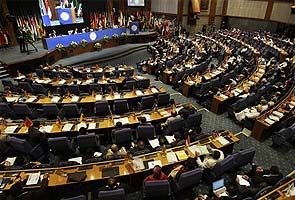
Non-Aligned Movement (NAM) Summit opens today

Tehran: Amidst Western efforts to isolate Iran over its nuclear programme, the 16th Summit of the Non-Aligned Movement will open in Tehran on Thursday with issues like Syrian crisis and Palestine statehood set to dominate the agenda.

The Summit of the 120-nations grouping will open with Iran assuming the Chair from Egypt for the next three years.

Prime Minister Manmohan Singh is leading the Indian delegation to the two-day Summit which is being attended by over 30 Heads of State/Governments.

While the US has asked countries not to attend the NAM Summit due to its venue, Iran is projecting the presence of world's leaders as a big diplomatic win.

Asked about crucial issues, including Syria on which the members have differing views, government sources said: "We don't expect any fireworks on Syria... the attempt is to have a successful outcome of the Summit."

United Nations chief Ban Ki-moon also arrived in Tehran as an invited observer to the summit. The United States and Israel have criticised his presence in Iran.

Leaders already reported to have arrived in Tehran include Afghan President Hamid Karzai, Bangladesh Prime Minister Sheikh Hasina, Benin President Thomas Boni Yayi, Bhutanese Prime Minister Jigmi Thinley and Cambodian Prime Minister Hun Sen.

Iran is under four rounds of UN Security Council sanctions for turning down West's calls to give up its right of uranium enrichment.

Also, the US and its allies have imposed severe sanctions on Tehran hoping to force it to a negotiating table.

From: NDTV

Wednesday, August 29, 2012

NAM summit: Iran will try to prove it's a global power

NAM summit: Iran will try to prove it's a global powerTehran: In the biggest public relations initiative undertaken in the 33-year-old history of the Islamic Republic of Iran, the country hopes to shed its status of international pariah, as it gets set to host the 16th summit of the 120 member Non Aligned Movement.

Over 30 heads of state are expected in Tehran between the 29th and 31st of August. Driving from the Imam Khomeini airport to the city, it is clear the Ahmadinejad government has spared no effort to welcome the leaders, nor in the message it is sending out to the West by hosting this summit. Massive hoardings along the highway welcome NAM leaders to the homeland of culture, as one puts it. Others talk about the need to avoid being enslaved, sending out messages of lasting peace through joint global governance. But one screams out at America: "nuclear energy is an undeniable right for Iran."

At the entrance to the convention hall where the summit will take place, it is hard to miss the wreckage of three cars, driven by Iranian nuclear scientists who were either killed or hurt in Bomb attacks. Tehran has insisted they were attacked by Israeli intelligence agents.

Both Israel and the United States have expressed their displeasure over the willingness of NAM leaders to attend the summit in Tehran and hand over the presidency of NAM for the next three years to it.

Sanctions against Iran and their impact

As the West is increasingly convinced Iran is pursuing nuclear weapons rather than nuclear energy, the country's foreign minister Ali Akbar Salehi opened the meeting of foreign ministers on Sunday with a plea to Non Aligned nations to oppose US-backed sanctions against Iran for its nuclear programme. With currency devaluation and runaway inflation, the exchange rate on the black market today is about 21,00,000 riyal to a 100 US dollars. With food prices going up by the day, and growing youth unemployment, the sanctions have crippled the Iranian economy, hitting the ordinary middle classes the worst. As recently as July, the European Union's ban on Iranian oil imports came into full effect, denying the country a market that was buying 18 per cent of its oil annually.

Given the squeeze from the West, Tehran is hoping to counter the damage of sanctions by wooing energy hungry countries like India and China. While India's oil imports from Iran have fallen since the EU sanctions in July, they are still high enough to give the Iranian government a revenue cushion as the crisis plays out.

Iran is also hoping India will commit to investing nearly 100 million dollars in the Chahbahar port, that could help Delhi bypass Pakistan completely as a transit route for trade with key markets in Afghanistan. For India, trying to get Iran to move on this project going for nearly a decade, Ahmedinajad's sudden willingness to push it forward means a diplomatic tightrope walk and the need to balance its own energy requirements and national interests in the face of concerns from America. As it courts Washington's ire over the NAM summit, Delhi is hoping to bring Afghan president Hamid Karzai on board for a trilateral agreement, in order to take the agreement forward.

Iran's public relations exercise

With the opportunity to host a summit as large as this one, Iran's president Mahmoud Ahmadinejad will use the event to prove Iran's legitimacy as a global power as America tries to isolate it on the world stage.

The event is so big, it has warranted a call for a three day government and school holiday. But if the sheer presence of these leaders is a PR victory for the Iranian president, he'll have to tread carefully on several other fronts - most notably the concerns over the denial of higher education to women who have been banned from pursuing 77 courses at the graduate level in the country in the coming year. These include engineering, accounting, and chemistry among others.

Freedom of the press is another obstacle that Ahmadinejad will have to cross, especially as international media gathers in Tehran to cover the proceedings of the summit and the state of the country freely. Social networking sites are banned, as they have been since the beginning. A large media presence is being restricted from filming in public areas, even personal photography is restricted, although to a lesser extent.

Syria

The summit officially kicks off on August 30th, with several bilateral meetings scheduled for Prime Minister Manmohan Singh with the Iranian leadership, Pakistan President Asif Zardari, and possibly Egypt's new President Mohammed Morsi, whose presence will be perhaps the most closely watched as an estranged Egypt reaches out to Iran to use its influence with Syria's Alwaite president Bash'ar Assad to find a way to end the conflict. While India sees an opportunity in Iran's proximity to Assad's regime to do so, there is likely to be some tension over whether to include specifics of a resolution on Syria in the final declaration of the NAM document.

Everyone's eye is on Iran, this time perhaps, for the right reasons. It is now up to the Iranian leadership to grasp the opportunity, and prove that it not only has the legitimacy of being of one of the grandest cultures of the world but that it also has a willingness to move forward on resolving conflicts that have plagued its relationship with the international community, for decades.  

From: NDTV

Friday, August 17, 2012

US firms paid more to CEOs than in taxes: Study

Twenty-six big U.S. companies paid their CEOs more last year than they paid the federal government in tax, according to a study released Thursday by a liberal-leaning think tank.

The study, by the Institute for Policy Studies, said the companies, including AT&T, Boeing and Citigroup, paid their CEOs an average of $20.4 million last year while paying little or no federal tax on ample profits, according to regulatory filings.

Some companies cited in the study said it was misleading. They also said they took advantage of tax deductions and credits designed to free up money for companies to spend in ways that stimulate the economy.

On average, the 26 companies generated pretax net income of more than $1 billion in the U.S., the study said.

The study blasted tax rules allowing unlimited deductions for CEO "performance-based" pay, like many stock options. It said the five biggest performance payers among the 26 companies took $232 million of these deductions last year.

Among the "kingpins" it criticized was CEO James McNerney Jr. of Boeing. It said he got $18.4 million in pay last year while his company received a tax refund of $605 million.

The study also laid into Citigroup for paying CEO Vikram Pandit $14.9 million while the bank received a net $144 million in tax benefits.

Eighteen of the 26 companies received cash back or credits to apply against tax in the future, according to the report.

The study, a 45-page attack on the corporate tax code, said deductions and credits are allowing companies to lavish big pay packages on executives so they can cut their tax bills while Washington gets less money in a time of trillion-plus deficits.

"Our nation's tax code has become a powerful enabler of bloated CEO pay," the study said.

To calculate tax, the study used companies' own math based on accounting rules. Regulators require companies to estimate their tax bill and disclose it in public documents for investors.

The tax filings the companies make to the government, typically in September, are private and can differ from the estimate.

Another problem is that the study doesn't count tax the company plans to pay but has deferred to future years. The authors argue that deferred tax can be put off indefinitely.

Charles Bickers, a Boeing spokesman, said that the company's federal tax bill, including deferred tax, was $1.3 billion last year, not a net credit, as the think tank's study found.

Boeing did lower its tax, in part by using a popular tax credit encouraging companies to spend more on research and development. Bickers said that helped the company hire 11,000 people in the U.S. last year.

"Boeing supports a simpler, more competitive tax code. At the same time, we have put the R&D tax credit to exactly the use it was designed — creating U.S. jobs in a high-value, advanced technology industry," he said in a statement.

The Institute for Policy Studies said Boeing would have spent the money on R&D without the credit.

In addition to performance-pay deductions and R&D credits, the report criticized the use of tax havens that allow technology companies, for instance, to assign intellectual-property rights to shell companies in the Cayman Islands, so they can run profits through them and avoid taxes. It noted that 26 companies have a combined 537 subsidiaries in tax-haven countries.

The study also cited accelerated depreciation on investments, which allows a company to take deductions for big-ticket purchases in one year, as opposed to over several years. That cuts taxes in the first year.

The study said AT&T used accelerated depreciation to save $5.2 billion on its 2011 taxes while paying CEO Randall Stephenson $18.7 million last year.

Sarah Lubman, an AT&T spokeswoman, said the point of accelerated depreciation is to encourage companies to make investments. She said AT&T made $20 billion in investments last year, helping to "drive the economy and support good-paying jobs."

She also said that the deductions won't be available to take in future years, which should increase taxes.

A Citigroup spokeswoman noted that the company lost money in 2008 and 2009 and used the losses to offset taxes on profits this year.