Showing posts with label FDI. Show all posts

Thursday, September 20, 2012

BJP keen on special Parliament session to corner government on FDI

New Delhi: With the Trinamool Congress deciding to quit the United Progressive Alliance (UPA), the Bharatiya Janata Party (BJP) sees an opportunity to corner the ruling coalition and is planning to demand a special session of Parliament to discuss the issue of Foreign Direct Investment (FDI) in retail but its key ally Janata Dal (United) is not in favour of this move.

The BJP says it feels the government will not last its full term till 2014 if the Trinamool Congress goes ahead with its decision to exit the UPA.

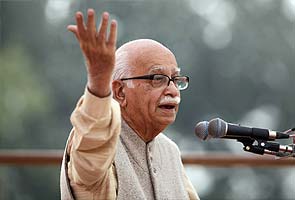
Senior party leader L K Advani said his party would like a special session to be convened to discuss this issue, holding that the government has committed a "breach of trust" of Parliament.

BJP keen on special Parliament session to corner government on FDIThe party, however, said it will consult its allies of National Democratic Alliance (NDA) after tomorrow's nationwide agitation against FDI in retail and diesel price hike before firming up its position.

"Yesterday's development has destabilised the present government. It is only a matter of time that it will collapse. The present government cannot last its full term till 2014. Anything can happen before that," Mr Advani told Press Trust of India.

He said since the then Finance Minister Pranab Mukherjee had promised in both houses of Parliament that the decision on FDI in retail would not be taken before evolving a consensus with all stakeholders, the government had committed a "breach of trust of Parliament".

"The promise had been made to both houses of Parliament by the then Finance Minister Pranab Mukherjee that we will not bring FDI in retail until a consensus is evolved with all stakeholders including all political parties and all Chief Ministers. Therefore, we hold that the announcement of FDI in retail is a breach of trust of Parliament," Mr Advani said.

He said "therefore, we would request for convening of a special session of Parliament. We will make a formal request to the President for the special session after the September 20 nation-wide bandh called by us."

Asked whether there is a need for convening a special session of Parliament, JD(U) leader Sharad Yadav said there is "no need" for it as it will not solve any problem.

BJP spokesperson Prakash Javadekar said "our leader L K Advani has said that we can demand a special session of Parliament on the issue as the Prime Minister had promised on the floor of the House that this is an era of federalism and if we bring FDI in retail, we will try and build a consensus before".

"We in NDA will decide on whether to convene a special session of Parliament... We will decide at the NDA meeting after tomorrow's nationwide bandh," he said. 

Bharat bandh over FDI in retail, diesel price hike: Trains stopped in Bihar, UP, Mumbai unaffected

New Delhi: The BJP-led National Democratic Alliance along with other opposition parties have called a nationwide bandh today to protest against the government's reform measures announced last week. Nearly 5 crore traders and 25,000 trade associations are also taking part in this bandh demanding rollback of FDI in multi-brand retail. Schools, colleges, markets and transport services are likely to be affected in most states.

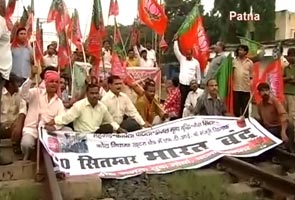
The protests began early this morning in Bihar and Uttar Pradesh. Workers belonging to BJP Yuva Morcha blocked three trains at Patna railway station and in Darbhanga, CPI(ML) workers stopped the Ganga Sagar Express. In Allahabad, Samajwadi Party workers staged demonstrations on rail tracks. There are also reports of trains being stopped in Bhubaneswar in Odisha.

In the national capital, public transport is running smoothly so far. Metro trains are also on time.

Bharat bandh over FDI in retail, diesel price hike: Trains stopped in Bihar, UP, Mumbai unaffectedMumbai and the rest of Maharashtra is likely to be unaffected by the bandh call due to Ganesh Chaturthi festivities. Both the MNS and the Shiv Sena and even the BJP have said that they will not enforce the nationwide strike in the state because of the ongoing festival. While MNS supports FDI in retail, BJP and Shiv Sena are opposed to it. So public transport, malls, super markets all other services are likely to function normally. Schools and colleges also will stay open.

Karnataka meanwhile has seen partial effect of the bandh call so far. While buses are off the road, autos are plying.  Trains are also running on time. There have been no protests so far.

Taking some politically tough decisions last week, the government had hiked the price of diesel by Rs. 5 per litre, capped the supply of subsidised liquefied petroleum gas (LPG) cylinders to six per household and cleared 51 per cent Foreign Direct Investment or FDI in multi-brand retail - reforms, which saw its biggest ally, Mamata Banerjee, pull out of the UPA. The opposition has called for the bandh to protest against these reform measures.

Today's strike against these new policies has won the support of parties ranging from the Left to the BJP, and crucially, Mulayam Singh Yadav, whose Samajwadi Party is now key for the government's survival. The Samajwadi Party, which has 22 MPs and was for long considered the Congress' Plan B if Mamata Banerjee ditched the UPA, has been playing hard to get. The SP has been vehemently opposed to FDI in retail and has told the UPA that it cannot take its support for granted. "Let the Congress be enlightened," he said yesterday, of the political situation, "that it has to give people more than corruption and rising prices."

The Left Front will also be holding a 12-hour strike in West Bengal to oppose the Centre's new reforms. "The government is making a false claim that oil companies are facing losses. ONGC, Bharat petroleum, Hindustan petroleum are making profits and not losses. So, there is no reason for increase in the prices of oil. This will increase inflation and prices of all commodities," CPM General Secretary Prakash Karat had said.

Meanwhile, coming as a huge relief to the UPA, which is now in a minority in Parliament after the Trinamool Congress announced it was exiting the Congress-led ruling coalition, Mayawati's Bahujan Samaj Party (BSP) has said it will not participate in the nation-wide strike even though the party opposes FDI in retail. The Congress is now looking at the BSP, which supports the UPA from outside, as its best bet to make up the numbers it needs to survive. The BSP has 21 MPs, two more than the Trinamool Congress.

The DMK, a member of the UPA with 18 MPs, has said it remains with the government, though it will participate in nationwide protest against FDI in retail, and the new diesel prices. Sources in the Southern party say that the DMK has decided "not to embarrass the UPA" and that its course will not be affected by Ms Banerjee's pull-out.

Though the policy to allow 51 per cent FDI was cleared first in November by the cabinet, it was shelved after Ms Banerjee threatened to pull out of the UPA. Sources say that last Friday, when the cabinet decided to implement the reforms, many senior ministers were also caught off-guard. The policy had not been listed in notes circulated before the meeting. Though Commerce Minister Anand Sharma had a phone conversation with Ms Banerjee the night before, he did not refer to FDI in retail. The government had informed other allies Sharad Pawar, Farooq Abdullah, and TR Baalu about its plans - allies who it was confident would not block the reform.

The new reforms, designed to revive a sluggish economy, means global firms such as Wal-Mart can set up shop with a local partner and sell directly to consumers for the first time. Like the Left and the BJP, Ms Banerjee had argued that the entry of international super-markets will put thousands of corner shops and farmers out of business. 

Saturday, September 15, 2012

FDI in multi-brand retail, aviation: PM introduces bold new policies

New Delhi: The Prime Minister has introduced the boldest reforms yet in his current term - foreign super-market chains can now enter India and foreign airlines can buy stake in Indian carriers. "The Cabinet took many decisions on Friday to bolster economic growth and make India a more attractive destination for foreign investment," tweeted Dr Manmohan Singh's office last evening. "I believe that these steps will help strengthen our growth process and generate employment in these difficult times."

Key ally Mamata Banerjee is reportedly furious and will decide on Tuesday whether to exit the ruling coalition - a threat issued by her party on Friday. "We cannot support price hike of diesel and reduction in subsidized LPG cylinders. On Friday, a decision has been taken allowing FDI in retail sector. It is a big jolt," Ms Banerjee said on her Facebook page, adding that she was prepared to take "hard steps" if the new policies are not reversed.

FDI in multi-brand retail, aviation: PM introduces bold new policies
The government, though, made it clear that it will not be held hostage. Commerce Minister Anand Sharma pointed out that states have the right to reject the multi-brand reforms. "It is an enabling legislation," he said, adding that, "while we respect Mamata Banerjee's prerogative to implement or not implement...equally it is the prerogative of other states to have it." Late last year, the cabinet had allowed 51% Foreign Direct Investment or FDI in multi-brand retail, but suspended its plans after Ms Banerjee threatened to opt out of the Congress-led coalition at the Centre.

The new reforms, designed to revive a sluggish economy, means global firms such as Wal-Mart can set up shop with a local partner and sell directly to consumers for the first time. Like the Left and the BJP, Ms Banerjee has argued that the entry of international super-markets will put thousands of corner shops and farmers out of business.

The Cabinet on Friday also relaxed norms to allow international airlines to invest in domestic carriers, allowed more FDI in broadcasting services and announced disinvestment in four key profit-making public sector units (PSUs).

The dramatic announcements came a day after the government took the politically tough decision to hike the price of diesel by Rs. 5 per litre and also capped the supply of subsidised liquefied petroleum gas (LPG) cylinders to six per household. Faced with the threat of becoming the first in the BRIC (Brazil-Russia-India-China-South Africa) group of emerging economies to be downgraded to junk, the government now seems clear that economic imperatives far outweigh political expediency.

That signal has brought cheer to Industry and the markets, which surged on Friday in anticipation of reforms. The Sensex clocked the biggest one-day gain in 10 months. The BSE benchmark index closed at 18,464.27, up 443 points or 2.46 per cent - a 14-month high.

Foreign airlines can now own upto 49% in a domestic carrier, providing a much-needed source of funding for debt-laden airlines. Opening the sector to foreign airlines is likely to help passengers too with more competitive fares and world-class management and technology. 

Ailing Kingfisher Airlines, which was India's No. 2 local carrier a year ago but has since grounded most of its fleet, has lobbied hard for this move in hopes that it can attract a foreign airline investor, although none has publicly expressed interest. More successful players like IndiGo and Jet have expressed reservations in the past that allowing global players in will lead to cartelisation and takeovers of Indian carriers.

Budget carrier SpiceJet, the fourth-largest of India's six main airlines, said on Thursday it was in initial talks with several Gulf carriers and was waiting for the government to ease rules before it takes a final call.

With global airlines buffeted by the European debt crisis and high fuel costs, cash-rich and fast-growing Gulf carriers such as Dubai's Emirates, Qatar Airways and Abu Dhabi's Etihad are seen as the most likely buyers of stakes in Indian carriers, analysts say.

(With inputs from Agencies)

Govt clears FDI in multi-brand retail, 'furious' Mamata to decide on support on Tuesday

New Delhi: The government has cleared 51% Foreign Direct Investment or FDI for multi-brand retail, a major reform aimed at jumpstarting a lethargic economy and combating the image of an administration riddled with policy paralysis.

The move will allow global firms such as Wal-Mart Stores to set up shop with a local partner and sell directly to consumers for the first time, though individual states have the right to reject the reform. The proposal had been cleared by the cabinet in November last year but was suspended because of adamant opposition by key ally Mamata Banerjee, the chief minister of West Bengal. Her party warned today that it will take "a major decision on support" if the Congress does not withdraw both the FDI reforms cleared today and the decision yesterday to increase the prices of diesel by Rs. 5 and to cap the number of subsidised LPG cylinders available for each household. "We cannot support price hike of diesel and reduction in subsidized LPG cylinders. Today, a decision has been taken allowing FDI in retail sector. It is a big jolt," Ms Banerjee said on her Facebook page, adding that she was prepared to take "hard steps" if the new policies are not reversed.

The government appeared to have taken the risks into account. "We respect her decision...it is her prerogative to implement or not implement...equally it is the prerogative of other states to have it," said Commerce Minister Anand Sharma. The BJP and Left both described the multi-brand retail policy as a betrayal of the people, arguing that it will put thousands of small shop-owners and farmers out of business. 

The slew of reforms cleared by Dr Manmohan Singh today, the boldest in his current term, include permitting foreign airlines to buy upto 49% in an India carrier and selling off stake in major state-run firms, which will not be revoked, said sources. The government has also rejected demands from other political parties to revoke a hike in heavily subsidised fuel prices announced yesterday.

India's inability in the past months to push through major reforms and ease its subsidy burden as growth slowed sharply has put it in danger of becoming the first of the big "BRIC" emerging economies to see its credit rating downgraded to junk.

Foreign investors, experts, and industry have been stressing that the Prime Minister has a narrow political window to push reforms key to reviving India's flagging growth. The general elections are two years away, and international media in recent months has been critical of Dr Manmohan Singh, labelling him an "under-achiever" reluctant to take politically-tough but economically-critical decisions.

The government has been trying for months to build consensus around reforms in retail. Those plans appeared to come undone in June when Mulayam Singh Yadav, the head of the Samajwadi Party, wrote to the Prime Minister urging him not to proceed with reforming the retail sector because it would result in job losses.

Understanding FDI in multi-brand retail

New Delhi:  The Cabinet Committee on Economic Affairs on Friday cleared 51 per cent foreign direct investment in multi-brand retail.
FDI norms made easy:
  1. Retail sales outlets may be set up in those states that have agreed or will agree in future to allow FDI in multi-brand retail under this policy. The establishment of the retail sales outlets will be in compliance of applicable state laws/regulations, such as the Shops and Establishments Act etc.
  2. Retail sales outlets may be set up only in cities with a population of more than 10 lakh as per 2011 Census and may also cover an area of 10 km around the municipal/urban agglomeration limits of such cities.
  3. Retail locations will be restricted to conforming areas as per the master/zonal plans of the concerned cities and provision will be made for requisite facilities such as transport connectivity and parking.
  4. In states or union territories not having cities with population of more than 10 lakh as per 2011 Census, retail sales outlets may be set up in the cities of their choice, preferably the largest city and may also cover an area of 10 km around the municipal/urban agglomeration limits of such cities. The locations of such outlets will be restricted to conforming areas, as per the Master/Zonal Plans of the concerned cities and provision will be made for requisite facilities such as transport connectivity and parking.
  5. At least 50 per cent of total FDI brought in shall be invested in ‘back-end infrastructure’ within three years of the induction of FDI, where ‘back-end infrastructure’ will include capital expenditure on all activities, excluding that on front-end units. For instance, back-end infrastructure will include investment made towards processing, manufacturing, distribution, design improvement, quality control, packaging, logistics, storage, ware-house, agriculture market produce infrastructure etc. Expenditure on land cost and rentals, if any, will not be counted for purposes of backend infrastructure.
  6. A high-level group under the Minister of Consumer Affairs may be constituted to examine various issues concerning internal trade and make recommendations for internal trade reforms.